
Let's be direct. Your website isn't an online brochure; it should be your most effective salesperson. It's a 24/7 engine designed to attract qualified leads, build trust with potential customers, and drive revenue. But most websites owned by small businesses just sit there, collecting digital dust.
The difference between a website that costs you money and one that makes you money is the process used to build it. A high-performing site isn’t a happy accident—it’s the result of a deliberate, strategic plan.
Why a Predictable Web Development Process Matters
This guide pulls back the curtain on our proven stages of web development. We're laying out a clear roadmap, free of confusing tech-speak, to show you how we build a digital asset that delivers a measurable return on investment.
When you understand these phases, you're no longer guessing. You can see how every decision—from the initial blueprint to the final launch—is tied directly to your business goals. This is the first step in turning website traffic into predictable revenue.
How Did We Get Here?
Web development has come a long way. The simple, text-based pages of the 1990s have evolved into a complex, multi-stage process that includes strategy, design, coding, testing, and ongoing optimization.
Why does that matter to a business owner? Because following these distinct stages is what leads to websites with up to 200% faster load times and 30% higher conversions. For a contractor or dental office investing in local SEO or paid ads, those aren't just vanity metrics—they're the difference between a phone that rings and one that doesn't.
This diagram breaks down the high-level flow from initial planning to the final launch.
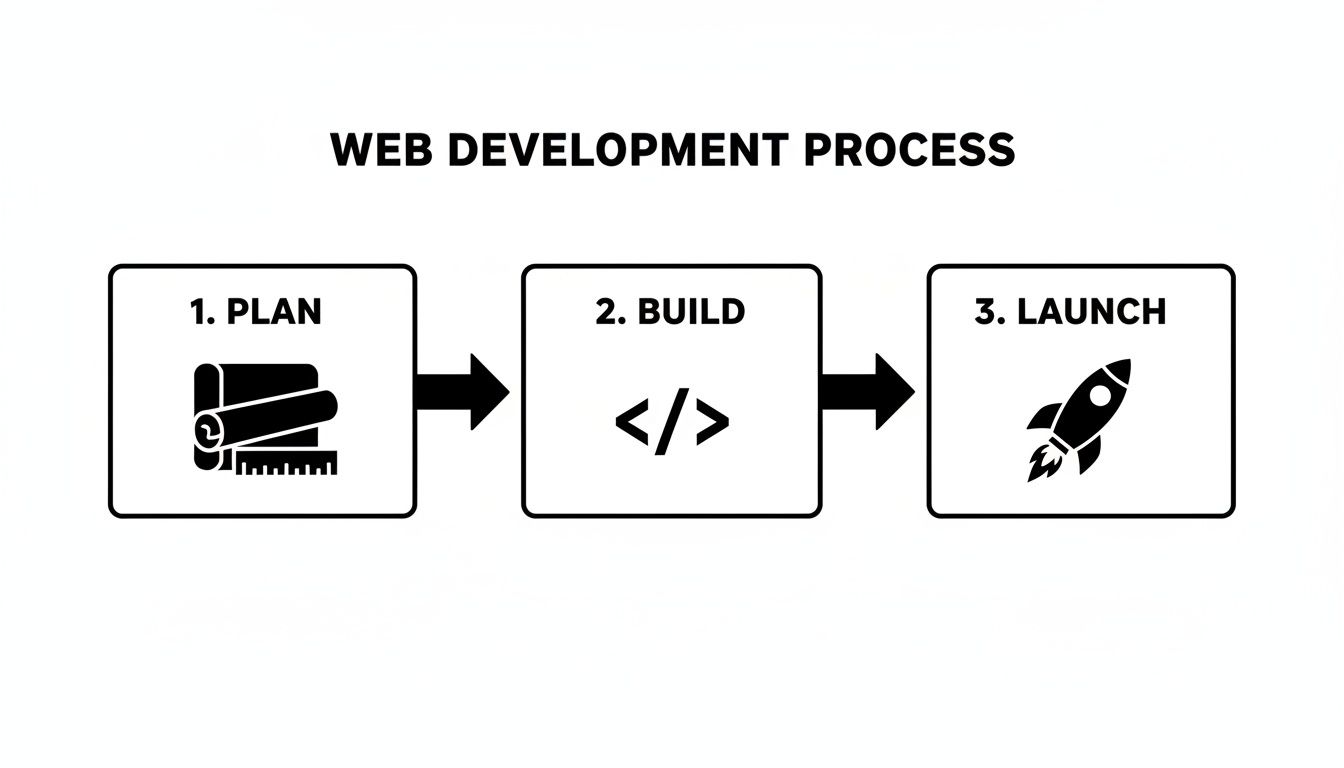
This "Plan, Build, Launch" model is simple, but it's the core of a well-run project. It prevents costly rework and ensures the final website actually solves a business problem. A methodical approach like this also ensures that crucial elements, like user experience design best practices, are woven in from the start, not just tacked on as an afterthought.
A website built without a clear process is an expense. A website built with a strategic, multi-stage process is an investment that generates returns month after month.
The 7 Stages of Web Development at a Glance
Here’s a bird's-eye view of the entire process. This table outlines the core purpose of each stage and, more importantly, what it means for your business.
| Stage | Core Focus | Your Business Outcome |
|---|---|---|
| 1. Discovery & Strategy | Uncovering business goals, target audience, and competition. | A clear project scope and a shared definition of success. |
| 2. Planning & Architecture | Creating the project roadmap, sitemap, and technology plan. | A detailed blueprint that eliminates guesswork and guides the project. |
| 3. UX/UI Design & Content | Designing the user journey, wireframes, and visual mockups. | A visually appealing, easy-to-use interface that guides users to action. |
| 4. Development & Coding | Writing the code that brings the design and functionality to life. | A functional, interactive website built on a private staging server. |
| 5. Testing & Quality Assurance | Rigorously testing for bugs, browser compatibility, and performance. | A polished, error-free website ready for public launch. |
| 6. Launch & Deployment | Deploying the website to the live server and making it public. | Your new website is live and ready to attract customers. |
| 7. Post-Launch & Growth | Providing ongoing support, maintenance, and performance monitoring. | A secure, updated, and continuously improving asset that grows your business. |
As we dive into each stage, you'll see how they build on one another to create a final product that doesn't just look great but performs even better.
Stage 1 & 2: Discovery, Strategy & Planning
Every successful website starts long before a single line of code is written. Think of this initial stage as creating the architectural blueprints for a custom-built home. You wouldn't pour a foundation without knowing where the walls go or how people will move through the space. The same logic applies here.
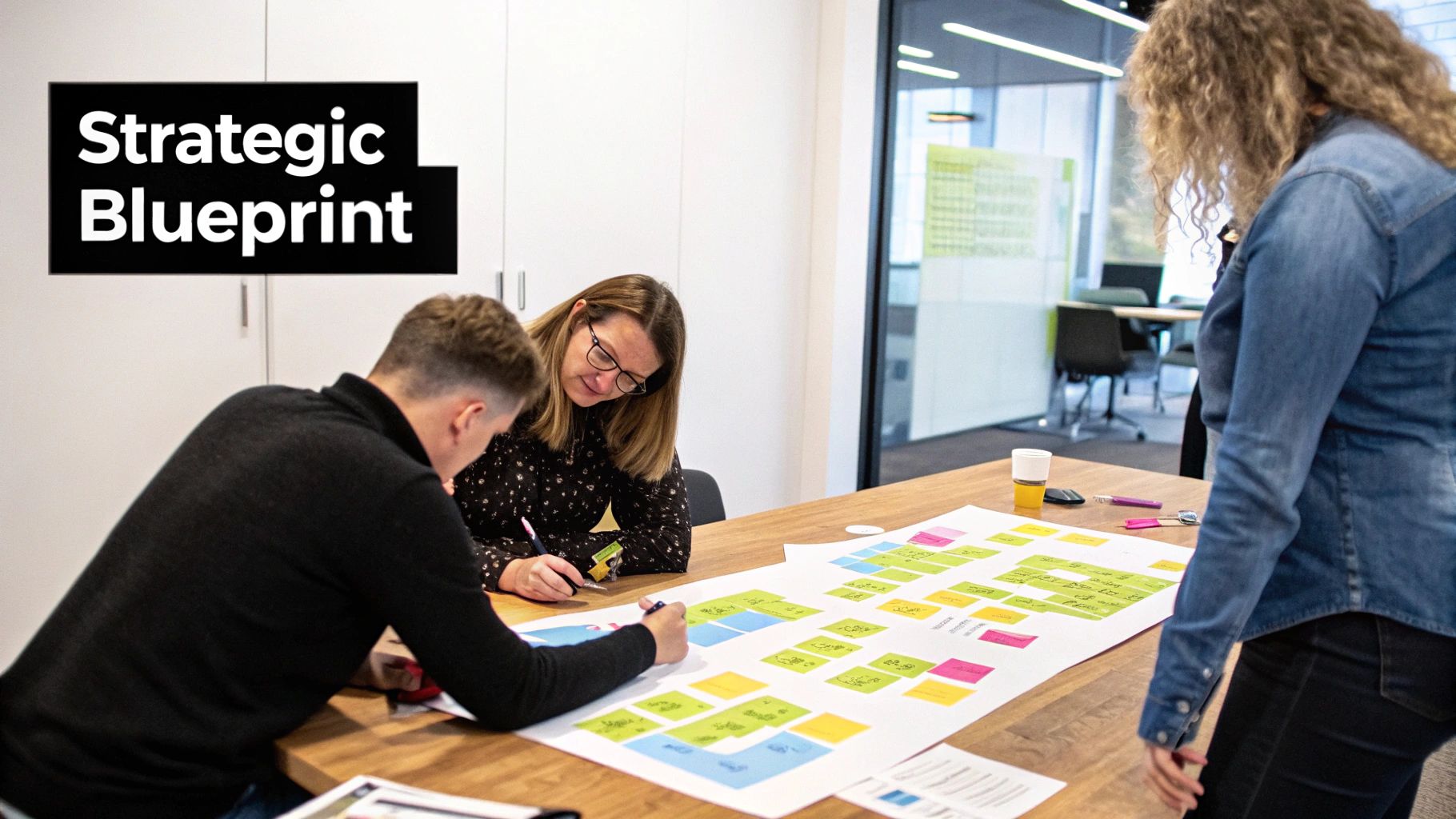
This phase is a collaborative deep dive, not just a questionnaire. It’s where we get to the core of your business—your revenue goals, your ideal customer, and the problems you solve for them. We map out their journey, from the moment they realize they have a problem to the moment they decide you're the one to fix it.
Defining the Project Blueprint
One of the biggest mistakes business owners make is wanting to rush this part. It’s understandable to be excited about seeing a design, but a design without a solid strategy is just a pretty picture. It won't grow your business. Following proven SDLC best practices is non-negotiable, and it all begins with this crucial planning work.
The goal here is to produce tangible, strategic documents that guide every decision that follows.
- Customer Personas: We build detailed profiles of your ideal clients. This is critical because it ensures the website's messaging, design, and features are all laser-focused on attracting the right people—the ones who will actually pay you.
- Competitive Analysis: We analyze what your top competitors are doing online to find their weaknesses and identify opportunities. This lets us position your new website to win customers they're overlooking.
- Sitemap & Feature List: This is where we create a map of all your website's pages and prioritize the features that will actually drive business goals, not just add clutter.
This structured process is our best defense against "scope creep"—that dreaded, slow expansion of tasks that blows budgets and wrecks timelines. It’s all about getting on the same page from day one.
Why Skipping This Stage Costs You More
It’s tempting to jump straight into design to feel like you're making progress. But that shortcut almost always backfires. Projects that skimp on planning frequently overrun their budgets by an average of 45% and get hit with delays of up to 60%.
A properly executed discovery phase, however, can save up to 30% on the total project cost by preventing expensive rework later. For a closer look at how we map this out, you can check out our guide on strategic web page planning.
The Discovery and Planning stage typically takes 1-2 weeks, but the clarity it provides is priceless. It transforms your website from an online brochure into a strategic asset engineered for growth.
This initial investment of time is the most important part of the entire project. It’s what ensures the final product isn't just a website you like, but a powerful business tool that works 24/7 to attract and convert customers for you.
Stage 3: UX/UI Design & Content Creation
Once we have a solid plan, it's time to bring your website to life, both visually and verbally. We're not just picking colors and fonts; we're meticulously designing the exact path a visitor will take to become a paying customer. The goal is to create a clear, intuitive journey that guides them to a specific action, whether that's booking a consultation or requesting a quote.
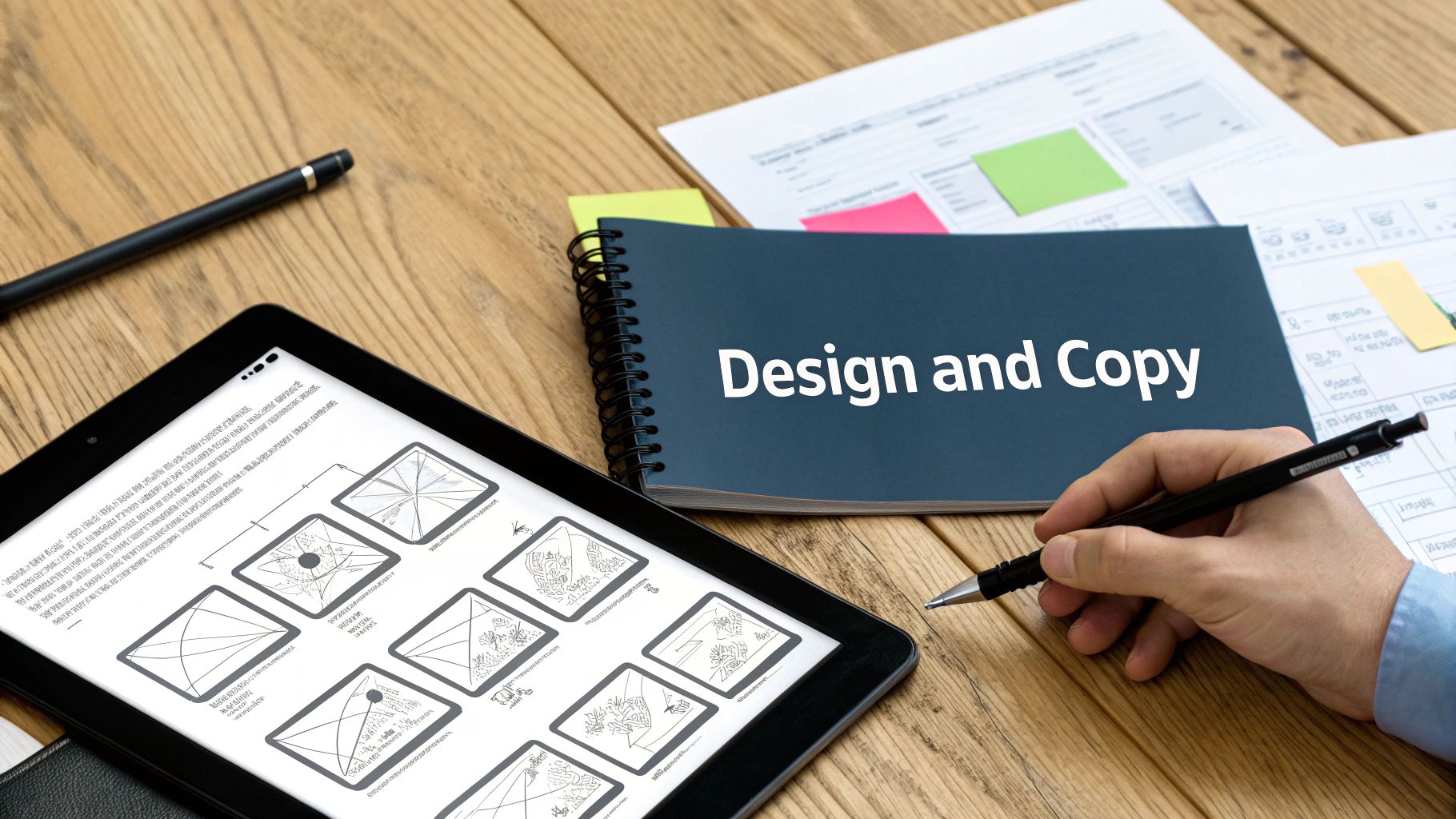
We begin with wireframes. Think of these as the architectural blueprints for each page—simple, black-and-white layouts. By stripping away branding and color, we focus entirely on structure, flow, and function. Nailing this skeletal framework first saves a ton of time and money on revisions later on.
After you've approved the wireframe, we move into the UI (User Interface) design. This is where your brand comes to life. We layer in your typography, color palette, and imagery to create a high-fidelity mockup. It’s the moment your website starts to look and feel like your business.
Why Design and Content Must Work Together
A beautiful website with weak messaging is like a stunning storefront with empty shelves. It looks great, but it won't convince anyone to buy. That’s why we tackle design and content creation at the same time—your words are as crucial as your visuals.
The copy needs to speak directly to your ideal customer, addressing their pain points and answering their questions before they even ask them. For an auto shop, this means talking about honest pricing and quick turnarounds. For a contractor, it means building trust and showcasing quality craftsmanship.
This idea of blending user experience with powerful content isn't new; it really took hold in the 2000s when platforms like WordPress (2003) and Facebook (2004) showed the world that intuitive design is the key to engagement.
Your website’s job is to build trust and compel action. This only happens when a clear message is delivered through an effortless user experience. They are two sides of the same coin.
Crafting that message is a skill. The synergy between clear messaging and clean design is what turns a simple website into your most powerful growth engine.
Your Role vs. Our Role in the Design Phase
A smooth design phase is a partnership. To keep the project on track and avoid bottlenecks, it helps to be clear on who does what. This table breaks down the typical responsibilities.
| Task | Your Responsibility (The Client) | Our Responsibility (Uncommon Web Design) |
|---|---|---|
| Brand Assets | Provide your logo, brand color codes, and any existing style guides. | Apply your branding consistently across the entire website design. |
| Content & Messaging | Share core business information, key service details, and customer pain points. | Craft compelling, SEO-friendly copy that articulates your value. |
| Feedback & Approvals | Provide timely and consolidated feedback on wireframes and visual designs. | Create wireframes, design mock-ups, and revise based on your feedback. |
| Imagery | Supply high-quality photos of your team, location, or products. | Source professional stock imagery or coordinate a photoshoot if needed. |
Clear roles and open communication make all the difference. Beyond just the words and images, the overall feeling of your brand is what makes your site memorable. Learning how to create a brand identity that truly connects with your target audience is a game-changer.
Stage 4: Development & Coding
Now we get to the part where strategy and design become a reality. This is the most technically intensive phase of the project, where we take the approved mockups and turn them into a living, breathing website. Our developers translate the visual design into clean, reliable code.
Think of it as the construction phase. The blueprints are finalized, and now the skilled tradespeople show up to frame the walls and install the plumbing. It’s less about creative brainstorming and all about precise, technical execution.
Building Both Sides of the Coin
Web development is a tale of two halves that must work together perfectly. Knowing the difference helps you understand where the time and effort go.
- Front-End Development: This is everything your visitors see and interact with in their browser. Our developers use HTML, CSS, and JavaScript to ensure the layout looks exactly like the design, buttons work as expected, and animations are smooth.
- Back-End Development: This is the engine room of your website. It's the server, the database, and the behind-the-scenes logic that makes the site work. The back-end is what processes a contact form submission or manages your e-commerce inventory.
For most businesses we work with, we build on powerful, flexible platforms like WordPress. This gives us a rock-solid back-end and leaves you with an easy-to-use Content Management System (CMS), so you can update text and photos yourself without calling us for every small change.
Transparency Throughout the Build
The development phase is usually the longest part of the journey, often taking 6 to 15 weeks, depending on the site's complexity. Good, clean coding takes time. To ensure you’re always in the loop, we build your entire website on a private "staging" server.
We give you a direct link to this staging server from day one. This lets you watch the site come together in real-time and offer feedback as we go, long before it ever goes public.
This open-door policy removes the mystery. You aren't left wondering what’s happening for weeks on end; you can see your new digital storefront being built, one piece at a time.
It's More Than Just Code
During this stage, our team is juggling several critical tasks to ensure your website isn't just pretty, but powerful.
- Responsive Design Implementation: We code the site to be fully responsive from the ground up. This guarantees it looks fantastic and works flawlessly on every device—from a desktop monitor to a smartphone. Since over half of all web traffic now comes from mobile, this isn't optional; it's essential.
- Essential Integrations: We connect the tools your business depends on. This could be getting contact forms to send leads to your inbox, integrating a payment processor like Stripe, or connecting an online scheduling tool.
- Basic SEO Foundation: We build the site with Search Engine Optimization (SEO) in mind from the start. This means clean code, proper page titles, and a logical site structure—the technical nuts and bolts that help Google understand your site and rank it accordingly.
By the time we’re done here, you’ll have a fully functional website on our staging server, ready for the final checks before we introduce it to the world.
Stage 5 & 6: Testing, Launch & Deployment
Your new website is built and functional—but it's still living on our private server, hidden from the world. We're close, but we're not ready to pop the champagne. This is where we shift into the quality assurance (QA) and testing phase. Think of it as the final, exhaustive inspection before you open the doors to a new storefront.
This isn’t a quick once-over. It’s a methodical, top-to-bottom shakedown where we actively try to break things. Why? We want to find and fix every potential glitch or broken link before a real customer does. A single bad experience can mean a lost lead, so we leave nothing to chance.
The Art of Bug Squashing
Our goal here is simple: ensure that from the very first click, every visitor has a perfect, seamless experience. We test the site in dozens of scenarios to make sure it performs consistently for everyone, no matter their device or browser.
Here's what our pre-flight checklist looks like:
- Cross-Browser Testing: We ensure your site looks and works perfectly on all major browsers—Chrome, Firefox, and Safari.
- Device Compatibility: We test it on a whole range of devices, from large monitors to small phones, to ensure the responsive design holds up.
- Performance Optimization: We’re obsessed with speed. We compress images, clean up code, and run tests to get your site loading lightning-fast. A one-second delay in page load time can cause a 7% drop in conversions.
- Functionality Checks: Does the contact form actually send you an email? Does the shopping cart work correctly? We click every button and test every feature to make sure they do what they're supposed to do.
This bug-squashing process usually takes about 1 to 2 weeks. It's your best insurance policy against a bad first impression that could damage your brand's reputation right out of the gate.
Preparing for a Smooth Launch
Once we’ve fixed every bug and you've given us the final green light, it’s time to go live. This isn't just flipping a switch; it's a carefully planned technical event. We handle every detail to ensure a seamless transition with zero downtime.
A well-executed launch protects your hard-earned SEO and makes sure your customers see a flawless transition to the new and improved site.
We manage the entire migration, moving the website from our private staging server to your live hosting account. From there, we point your domain name to the new site, lock down security, and run one last round of tests to make sure everything is working perfectly in its new home.
This meticulous approach means that when your new website goes live, it’s an instant upgrade for your business. Your visitors get a fast, professional experience, and you get a powerful new asset ready to generate leads and sales from day one.
Stage 7: Post-Launch Support & Growth
Your website launch isn't the finish line; it's the starting line. Too many business owners treat their new site like a printed brochure—once it's done, it's done. But an effective website is a living part of your business. It needs ongoing care and strategic adjustments to perform at its peak and deliver a return that grows over time.
This final stage is about shifting from building to growing.
Protecting Your Investment with Ongoing Maintenance
Think of your website like a work truck. It needs regular tune-ups to keep it running smoothly. If you neglect maintenance, it can become slow, buggy, or worse, a security risk. A poorly maintained site actively hurts your business by frustrating potential customers and sending them to your competitors.
We handle this foundational work so you can focus on your business. Our post-launch support is built on three pillars:
- Performance: This covers managed hosting, regular backups, and software updates to keep your site fast, dependable, and always online.
- Security: We constantly monitor for threats, blocking them before they can do any damage. This protects your data and your customers' trust.
- Support: When you have a question or need a quick update, you get a partner who knows your business—not a faceless support ticket.
From Data to Decisions: The Growth Phase
While maintenance keeps your website healthy, real growth comes from analyzing its performance. This is where your site transforms from a simple online presence into a strategic business tool. We track key metrics to see how real people are using your site.
This data tells a story. It shows us where visitors get stuck, what content they engage with, and where the biggest opportunities are hiding.
Launching a website without a plan to track and analyze its performance is like driving a new delivery van with the windows blacked out. You're moving, but you have no idea if you're heading in the right direction.
Turning Insights into Revenue
The insights we pull from performance data are gold. They let us stop guessing and start making strategic improvements that directly impact your bottom line.
This ongoing optimization cycle might look like:
- Conversion Rate Optimization (CRO): If the "Request a Quote" button isn't getting many clicks, we can test different colors, wording, or placements to find what encourages more people to become a lead.
- Content and SEO Adjustments: Maybe a blog post is getting traffic but people leave immediately. We can improve the content, add a stronger call-to-action, or tweak it to better match what people are searching for.
- Improving User Flow: If we see people abandoning their cart during checkout, we can figure out why. Is it confusing? Too slow? We can streamline the process to capture those lost sales.
This data-driven loop—analyze, adjust, and measure—is how you turn a website into an asset that appreciates over time, working harder and smarter to grow your business long after launch day.
FAQs About the Web Development Process
If you're considering a new website, you've probably got questions. Let's tackle some of the most common ones we hear from business owners like you.
How long does a typical web development project take?
For a standard small business website, plan for 8 to 12 weeks from our first conversation to launch day.
This is a general timeframe. If your project involves a complex e-commerce store or custom software integrations, the timeline will be longer. The key is that we map all this out during the planning phase so there are no surprises.
What is the single most important stage of the process?
Every stage is critical, but if I had to pick one, it would be the Discovery and Strategy stage. Hands down. This is where we lay the foundation for the entire project.
Think of it like building a house. You wouldn't start framing walls without a solid blueprint, right? This initial phase is our blueprint. It’s where we ensure your new website is laser-focused on your business goals, not just on looking pretty. Nailing this step saves a massive amount of time and money later.
A project with a weak foundation will never be structurally sound, no matter how great the design or code is. The planning phase is your project’s foundation.
How much of my time will this take as the business owner?
We know you're busy running a business, so our process is designed to respect your time. Your involvement is heaviest at the very beginning and then again right before the finish line.
You are the expert on your business, and we need your input during these two key phases:
- Discovery and Strategy: This is where we need to tap into your knowledge of your business, customers, and goals.
- Design and Content: We'll look to you for feedback and approval on the site structure, visual design, and messaging.
Once we get the green light on the design, our developers take over, and you can step back. You can check in on the private staging link anytime, but we won't need much from you again until the final review before we go live. It’s a focused approach that gets us the input we need without pulling you away from what you do best.
Ready to see how a strategic website can become your most powerful growth tool? The team at Uncommon Web Design has spent over 25 years building conversion-focused websites that turn traffic into paying customers. Schedule your free consultation today and let's build a roadmap to your business goals.