If your marketing feels like shouting into a void, it's not your fault—but it is a problem. You're likely talking to a generic audience, which means you aren't connecting with the specific people who need you most. The fix is to stop guessing and start building a crystal-clear picture of your ideal customer using real data.
This is where a buyer persona comes in. It’s not a fluffy marketing exercise; it’s a strategic tool that turns your website from a passive digital brochure into a 24/7 salesperson that speaks directly to the needs and pains of your best clients.
Step 1: Gather Your Customer Data
Before building a persona, you need raw materials. This means digging into both the numbers (quantitative data) and the stories (qualitative data) behind your customers. The goal is to build a complete picture of who they are, what they need, and why they choose you. This clarity is what fuels ROI.
Essential Data Sources for Building Your Persona
Here's where to find the qualitative and quantitative data you need to build an accurate, effective buyer persona.
| Data Type | Source Examples | What It Tells You |
|---|---|---|
| Quantitative | Google Analytics, CRM software (like HubSpot or Salesforce), sales reports, social media analytics. | Demographics: Age, gender, location. Behavior: How they found you, which pages they visited, how long they stayed, what actions they took. |
| Qualitative | Customer interviews, sales team feedback, online reviews (Google, Yelp), support tickets, customer surveys. | Motivations & Goals: What are they really trying to achieve? What "job" are they hiring your service to do? Pain Points & Frustrations: What specific problems are they struggling with? What's getting in their way? Watering Holes: Where do they spend time online? (e.g., specific forums, social media groups, blogs). |
Think of quantitative data as the "what" and qualitative data as the "why." You need both. The numbers show what people are doing, but interviews and feedback tell you the story behind those actions.
Why Data-Backed Personas Are Non-Negotiable
Relying on assumptions about your customers is like driving your business blind. You might get somewhere eventually, but you'll waste a lot of time and money on wrong turns. Data-backed personas give you a clear roadmap.
They help you understand:
- Motivations: What's the real driver pushing them to look for a solution like yours?
- Pain Points: What specific frustrations are they desperate to solve right now?
- Decision Triggers: What information do they need to see before they trust you enough to take the next step?
This isn't just theory—the impact on your bottom line is real. Companies using data-driven personas see significantly higher engagement and generate more revenue from targeted marketing compared to generic blasts. The data on current marketing trends confirms it: personalization, fueled by deep customer understanding, delivers a powerful return.
Key Takeaway: A well-researched buyer persona is the foundation of a marketing system that works for you. It ensures every dollar and hour you invest is focused on attracting and converting the right people.
For an auto shop, this means creating an ad that speaks directly to a parent's fear of their car breaking down, not just listing service prices. For a contractor, it means writing website copy that addresses a facility manager's need for reliability and clear communication—not just showing off past projects.
This is the focus that separates businesses that struggle from those that grow predictably.
Step 2: Uncover Their Core Insights

A powerful persona isn’t built on assumptions. It's built on real-world data. Here, you dig into the details that paint a complete, actionable picture of your ideal customer. Think of it less like research and more like gathering business intelligence.
To get this right, you have to go beyond basic demographics. Knowing the "who" and "where" is a starting point, but the real value is in uncovering the "why." This is what turns your service from just another option into the essential solution for their specific problem. Of course, this assumes you have a solid grasp of how to identify target customers in the first place.
Uncover Their Goals And Motivations
First, get inside their head. What are they actually trying to achieve? Forget about your service for a second and think about their world. What does a "win" look like for them?
A facilities manager’s goal isn’t to "hire an HVAC contractor." Their real goal is to ensure zero tenant complaints about the office being too hot or cold, all while staying under budget. Understanding that deeper motivation completely changes how you frame your service.
It's the same for a local roofer. A homeowner isn't just trying to "buy a new roof." They're trying to protect their family and their biggest investment from the next big storm. Your marketing needs to speak to that need for security, not just the shingles you use.
Pinpoint Their Pains And Challenges
This is the most critical piece of the puzzle. What’s getting in their way? What frustrations and obstacles keep them up at night? These pain points are the reason they start looking for a solution.
Your best customers are the key. They can tell you exactly what was wrong before they found you. Ask them direct questions:
- "Before working with us, what was the most frustrating part of the process?"
- "What was the tipping point that made you realize you needed a different solution?"
- "What were you using before, and what were its biggest shortcomings?"
A dental office might learn that their ideal patient isn't just afraid of pain—their real challenge is squeezing an appointment into a chaotic work schedule. The solution isn't just sedation dentistry; it's offering early morning and evening slots. That insight is marketing gold.
Your job is to find a problem so pressing that your service becomes the only logical answer. When you can describe their problem better than they can, they'll instinctively trust you have the solution.
Find Their Digital Watering Holes
Finally, where do these people spend their time online? It's pointless to pour your budget into Facebook ads if your ideal customer—say, a commercial property manager—spends all their time on LinkedIn and in industry trade groups.
You need to figure out:
- Which social media platforms do they actually use? Not just have a profile on, but actively engage with.
- What blogs, newsletters, or forums do they trust? This tells you where to be visible and listen to the conversation.
- How do they prefer to get information? Do they watch videos, read in-depth articles, or scan case studies? This shapes your content strategy.
Don't forget your sales team. They're on the front lines every day. They hear about the podcasts customers listen to on their commute or the newsletters they can't miss. Tapping into that knowledge is a shortcut to understanding your customer’s media habits.
And if you want to get your own house in order before diving in, our web audit checklist can help you spot quick wins on your own site.
Gathering these core insights—goals, pains, and watering holes—grounds your personas in reality. This foundation lets you craft a marketing message so precise it feels like a one-on-one conversation with your perfect customer.
Step 3: From Raw Data to a Real Persona
Okay, you've gathered your intelligence. Now it's time to transform that raw data into a clear, actionable tool your entire team can use. This is where you shift from collecting information to making sense of it.

The goal isn't to create a dozen different profiles. That just leads to scattered marketing. You're looking for the sweet spot: three to five distinct personas that represent the core of your audience.
Find the Patterns and Group Your People
Start by sifting through your qualitative data—the real, human stuff from customer interviews and sales team feedback. Look for common threads and recurring themes. You’re playing detective, searching for patterns in:
- Shared Pains: Are multiple people venting about the same frustrations? A commercial roofer might hear a dozen facilities managers complain about "unreliable subcontractors" or "surprise invoices."
- Common Goals: What's the real motivation driving their decisions? Are they trying to look good for their boss, reduce risk, or just make their own day-to-day life easier?
- Similar Hangouts: Where do they get their information? Maybe you notice the same industry blogs, LinkedIn influencers, or local community groups mentioned over and over.
As you group these similarities, distinct segments will begin to form. One group might be obsessed with the bottom line, while another prioritizes long-term reliability. These clusters are the building blocks of your personas.
Build a Story, Not Just a Profile
Once your segments are defined, it’s time to breathe life into them. This isn’t just about listing bullet points; it’s about crafting a story that makes each persona memorable. An abstract data set is easy to ignore, but it's hard to forget a person with a name and a story.
Give each persona a simple, alliterative name, like "Facilities Fiona" or "DIY Dave." This small step makes them feel like a real person your team can talk about in meetings. From there, you flesh out their profile with a simple, powerful template.
A great persona document is a cheat sheet for empathy. It lets anyone on your team—from marketing to sales—step into your customer's shoes and instantly grasp what matters most to them.
Your template doesn't need to be an elaborate, multi-page document. Simpler is better. Focus only on the details that influence how you market and sell to them.
A Simple But Powerful Persona Template
We recommend structuring your persona document around these five core sections. Each one answers a critical question that directly informs your strategy.
- Background: Who are they in a nutshell? Think job title, type of company, and a few key details like their general age range or years of experience.
- Goals: What are they ultimately trying to achieve in their role? List 1-3 primary objectives. Are they trying to stay under budget? Minimize operational downtime? Find a partner they don't have to micromanage?
- Challenges: What’s getting in their way? Detail the top 1-3 frustrations or roadblocks they face daily. This is the "problem" your business was built to solve.
- How We Help: This is where you connect the dots. Spell out exactly how your services solve their specific challenges and help them achieve their goals. This translates their pain into your solution.
- Memorable Quote: Boil their entire mindset down into a single sentence. Something like, "I just need a vendor I can trust to do the job right the first time so I can focus on the million other things on my plate."
This simple framework transforms a pile of data into a true strategic asset. It becomes the guide for everything from ad copy to new services. This story is the foundation for learning how to write website content that genuinely connects and gets people to act.
Step 4: Putting Your Buyer Personas Into Action
You've done the research and crafted a beautiful buyer persona document. Now what?
Frankly, it's worthless if it just sits in a shared drive. The real value isn't in creating the persona; it's in using it. Every single day. This is where you connect insightful research to tangible results on your balance sheet.
Think of your persona as a new filter for every marketing decision you make. From now on, every blog post, every ad campaign, and every website headline should pass a simple test: "What would 'Facilities Fiona' think of this?"
Reshape Your Website's Message
Your website should be your hardest-working employee—a 24/7 salesperson. Armed with persona insights, you can transform your site’s messaging from generic and company-focused to specific and customer-centric.
Pull up your key pages—homepage, services, about us—and read the copy through the eyes of your primary persona.
- Does your headline hit their biggest pain point right away?
- Is your language full of industry jargon, or does it sound like how they actually talk?
- Are your calls-to-action (CTAs) compelling to them?
For example, a commercial roofer's website might change its headline from "Quality Commercial Roofing Services" to "Reliable Roofing That Keeps Your Tenants Happy and Your Budget Intact." That small shift speaks directly to a facilities manager's core goals and fears, creating an instant connection.
Fuel a Smarter Content Strategy
Your content should be a direct answer to your persona's most urgent questions. Stop writing about what you want to talk about and start creating resources that solve their specific problems.
Map out your persona's biggest challenges and treat each one as a potential piece of content. Let's say you're a dental practice and your persona is "Busy Professional Brian," who struggles to find time for appointments. You could create:
- A blog post titled: "How to Fit Essential Dental Care into a Hectic Schedule."
- A short social video showcasing your flexible evening and weekend hours.
- An FAQ section on your site addressing common time-constraint concerns.
This strategy turns your marketing from an interruption into a welcome resource. You start building trust long before they ever think about calling. For many businesses, using personas this way is key to a powerful LinkedIn marketing strategy for B2B that genuinely connects with ideal clients.
Revolutionize Your Paid Advertising
Pouring money into ads without a clear persona is the fastest way to burn your marketing budget. Personas let you graduate from broad targeting to laser-focused campaigns that reach the right people with the right message, dramatically cutting wasted ad spend.
On platforms like Google and Facebook, you can plug in your persona’s details—job titles, interests, demographics, online behaviors—to build incredibly precise audiences.
Instead of targeting "small business owners," you can target "owners of construction companies with 5-15 employees who have shown interest in accounting software." That level of precision is a game-changer for your ROI.
This focused approach doesn't just improve targeting; it tightens up your entire sales process. In fact, 71% of companies that exceed revenue goals have documented personas, partly because this focus shortens the sales cycle.
Every marketing dollar you spend should be guided by your persona insights. From optimizing your website to fine-tuning follow-up sequences, this focus ensures your efforts are efficient and profitable. To learn more about tying these pieces together, check out our guide on integrating your CRM with your website. This is how you build a marketing machine that doesn't just make noise, but consistently drives real growth.
Real-World Persona Examples You Can Use
Theory is great, but seeing a persona in action makes the concept click. Abstract ideas like "goals" and "pain points" suddenly become concrete insights you can use to shape your marketing strategy.
Let's build out two practical examples. You can use these as a model for your own business, whether you're selling a service or a product.
Service Business Example: Commercial Carl
Imagine you run a commercial HVAC company. Your most profitable contracts come from facilities managers at mid-sized office parks. After interviewing a few of your best clients in this segment, a clear picture of "Commercial Carl" emerges.
Who is he? Carl is the Facilities Manager for a property group managing three office buildings. He's in his late 40s, has been in this field for over 15 years, and reports to a regional manager focused on the budget. He’s incredibly busy, juggling everything from landscaping to security.
What are his goals?
- Minimize Tenant Complaints: His primary goal is to keep things running so smoothly that his phone never rings with a problem.
- Stay Under Budget: He's tied to a strict annual maintenance budget. Unexpected costs force him into a painful approval process with his boss.
- Predictability: He wants partners who are reliable, show up on time, and communicate clearly so there are zero surprises.
What are his biggest challenges?
- Unreliable Contractors: His biggest frustration is hiring someone who doesn't show up or does a sloppy job, forcing him to waste his day managing them.
- Surprise Invoices: He hates getting a bill that’s higher than the quote. It makes him look bad and creates a mountain of paperwork.
- Reactive vs. Proactive: He's tired of vendors who only show up to fix things when they break instead of helping him plan ahead.
How do we help Carl?
We provide a scheduled quarterly maintenance plan that catches problems before they become emergencies. Our transparent, flat-rate pricing means Carl never has to worry about surprise costs. Our automated reminders and detailed service reports give him the clear communication he needs to keep his boss happy.
In his own words: "I have a million things to worry about. I just need an HVAC partner I can trust to do the job right without me having to look over their shoulder."
E-commerce Example: Pampered Pet Paula
Now, let's switch to an e-commerce brand selling premium, all-natural dog food. Their target customer isn't just a dog owner; they're a "pet parent." After analyzing survey data and social media comments, "Pampered Pet Paula" comes to life.
Who is she? Paula is a 32-year-old marketing professional in a city apartment with her French Bulldog, Winston. She views Winston as a member of the family. She's active on Instagram, following dozens of pet accounts for advice and product recommendations.
What are her goals?
- Maximize Her Pet's Health: Her main motivation is ensuring Winston lives the longest, healthiest life possible.
- Find Trustworthy Products: She wants to feel confident that the products she buys are safe, ethically sourced, and made with high-quality ingredients.
- Feel Like a Good Pet Parent: Her purchasing decisions are tied to her identity as a responsible caregiver.
What are her biggest challenges?
- Confusing Ingredient Lists: She gets frustrated by mass-market pet foods with long lists of chemicals and fillers she can't pronounce.
- Information Overload: She feels overwhelmed by conflicting advice online about what's truly healthy for her dog.
- Convenience: She has a busy schedule and needs a reliable way to get high-quality food delivered without visiting specialty stores.
How do we help Paula?
Our subscription delivery service brings human-grade, limited-ingredient dog food to her door. We use clear, simple language on our packaging and website to explain the health benefits of every ingredient. Our blog provides expert-backed content that cuts through the online noise, helping her make confident decisions for Winston.
This illustrates how a persona like Paula might interact with a brand across different touchpoints.
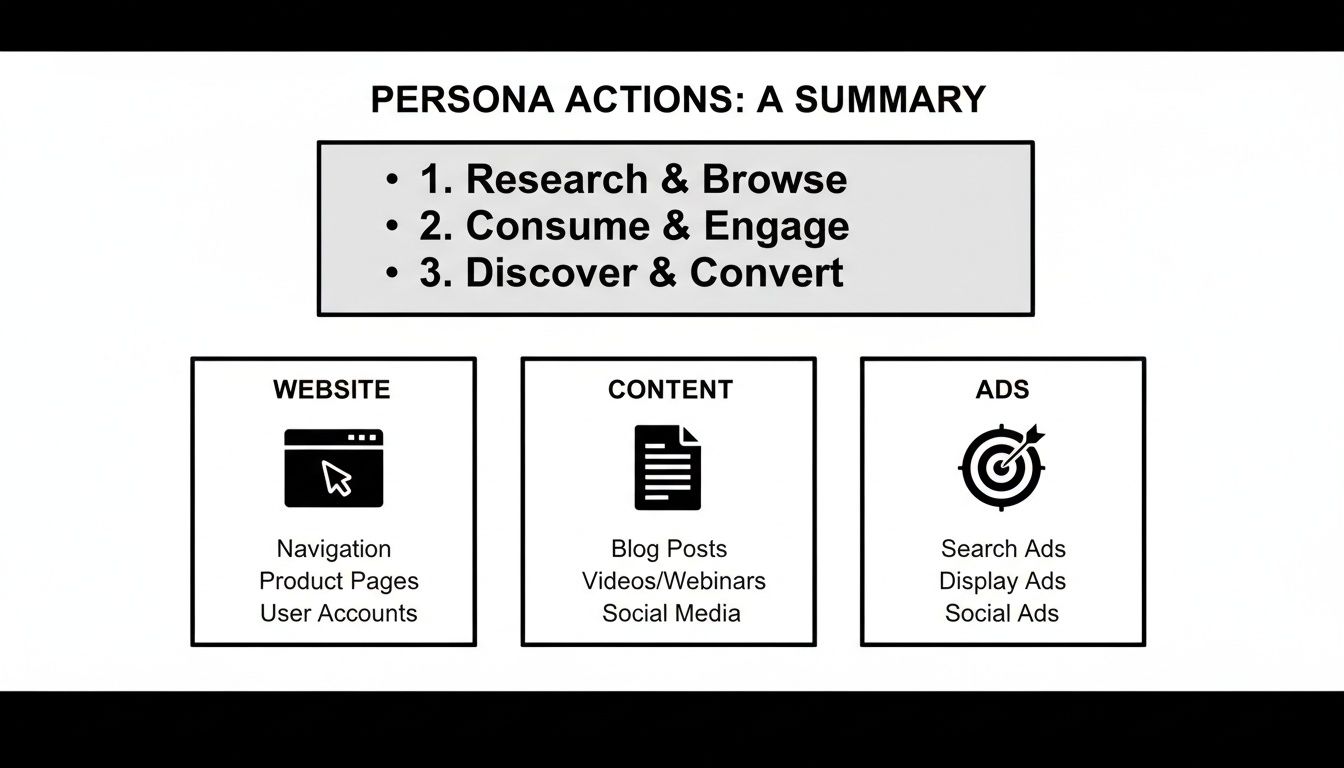
The key takeaway is that a persona's journey isn't linear. They might discover you through an ad, research on your website, and consume your content before making a decision.
Common Questions About Buyer Personas
Even with a clear roadmap, a few questions always pop up. Getting these right from the start means your personas will become a genuine asset, not just another document collecting digital dust.
How Many Buyer Personas Do I Really Need?
This is the most frequent question. The answer is probably simpler than you think: start with one, but aim for three to five.
For most businesses, that range is the sweet spot. It's enough to cover your key customer segments without spreading your marketing so thin it becomes ineffective. If you're new to this, just focus on your single most profitable customer type. Nail that one first.
The point here is clarity, not complexity. Too many personas will dilute your efforts. Too few, and your messaging becomes too generic to resonate with anyone.
For example, a local contractor who does both residential and commercial work absolutely needs at least two separate personas. A homeowner's worries and decision-making process are a world away from a commercial property manager's. Trying to talk to both with the same website copy is a surefire way to connect with neither.
What Is the Difference Between a Persona and a Target Audience?
It’s easy to mix these up, but the distinction is crucial. A target audience is a broad, demographic-based group. A buyer persona is a specific, story-driven character that represents that group.
Here’s a practical way to think about it:
- Target Audience (The "Who"): "Women, ages 25-40, living in urban areas, with an interest in fitness." It's a wide net based on general data.
- Buyer Persona (The "Why"): "CrossFit Chloe, 32, a marketing manager in San Diego. She's frustrated by her lack of time for healthy meal prep and is motivated by performance gains at the gym, not just weight loss."
See the difference? The target audience tells you where to aim, but the persona gives you the empathy to hit the bullseye. You can write an ad for "CrossFit Chloe" that speaks directly to her meal-prep frustration, creating an immediate connection that broad demographic targeting can't match. The persona reveals the why behind her actions.
How Often Should I Update My Personas?
Your buyer personas are not a "set it and forget it" project. They are living documents. Markets change, your customers' needs evolve, and your own business grows. They need a regular check-up to stay useful.
We recommend a full review of your personas at least once a year, perhaps as part of your annual planning. This ensures your marketing strategy is based on an accurate, current picture of who you're trying to reach.
Beyond the yearly review, you should also pull them out after any major business shift, like:
- Launching a new product or service
- Seeing a significant change in your sales trends
- Hearing new, consistent feedback from your sales or customer service teams
The goal is simple: make sure they're still an accurate reflection of the people you want to attract. An outdated persona can be just as damaging as having none at all.
At Uncommon Web Design, we believe that a deep understanding of your customer is the only foundation for real growth. It's how we build websites that don't just look good—they get results. If you're ready to stop guessing and create a digital presence that truly connects with your ideal buyers, we should talk. Book a free consultation with us today and let's turn customer insights into measurable growth for your business.